 Industrial Electronic Repairs / Electronic Design
Electronic design
Custom electronic design
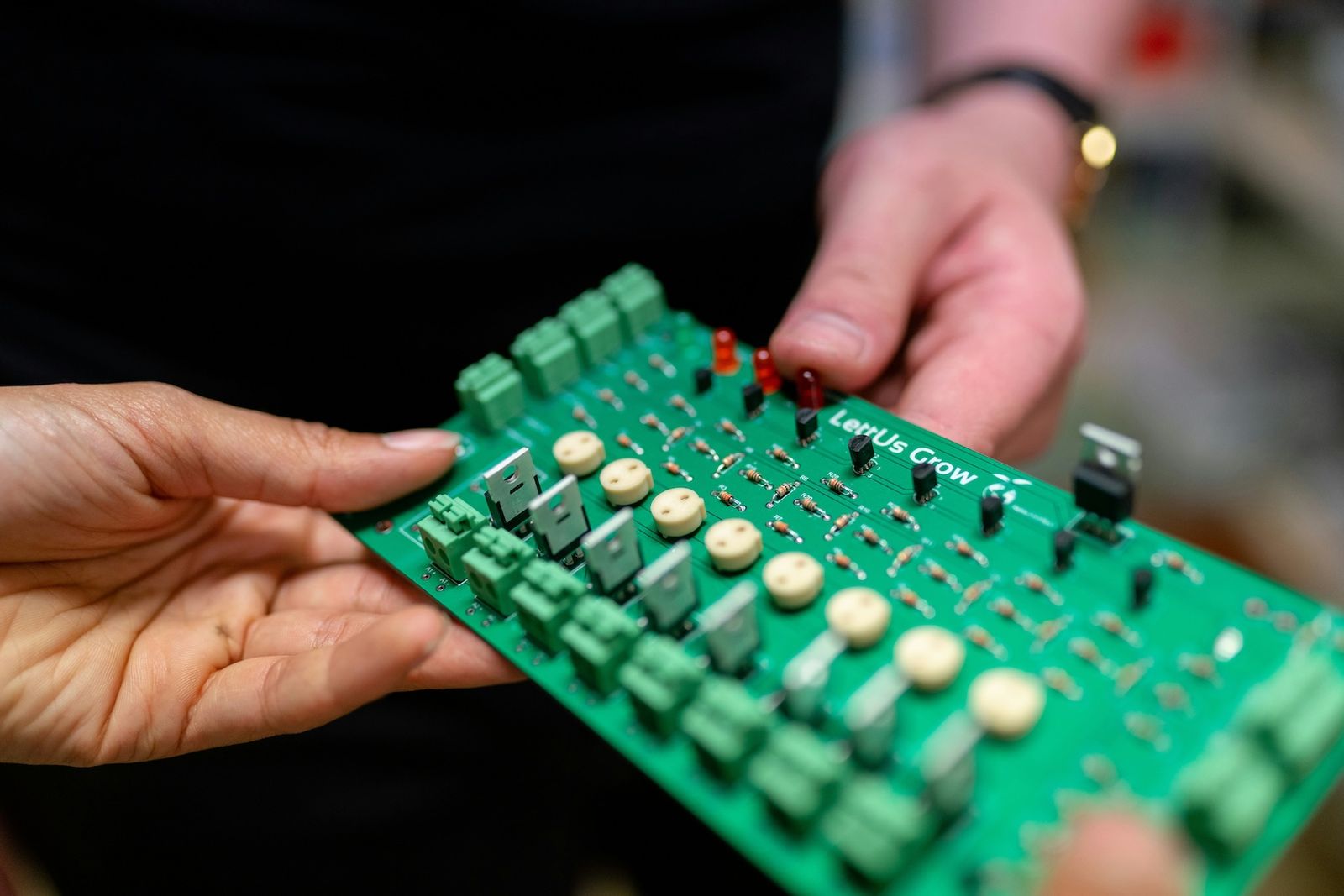
Sometimes the part no longer exists. Sometimes it never existed. In both cases a board can be designed that does exactly what your machine needs — with the same connections, the same signals and the same dimensions as what is in there now.
What we design
From a single replacement board to a completely new device
Replacement boards for what is no longer available
The board is broken, the manufacturer no longer exists and a new machine costs a hundred times as much. We design a replacement that fits in the same place and delivers the same signals.
New control and interface boards
Measuring, controlling, converting, connecting. Including the adapters you cannot buy anywhere because your combination of old and new equipment is too rare.
Firmware and embedded software
The software in the device itself: microcontroller, embedded Linux, communication over CAN, RS-485 or Ethernet. Hardware and software are designed together, by the same team.
Modernising existing electronics
Replacing obsolete components with available equivalents, eliminating susceptibility to interference, or making an analogue control system digital and readable.
How we work
From schematic to working prototype
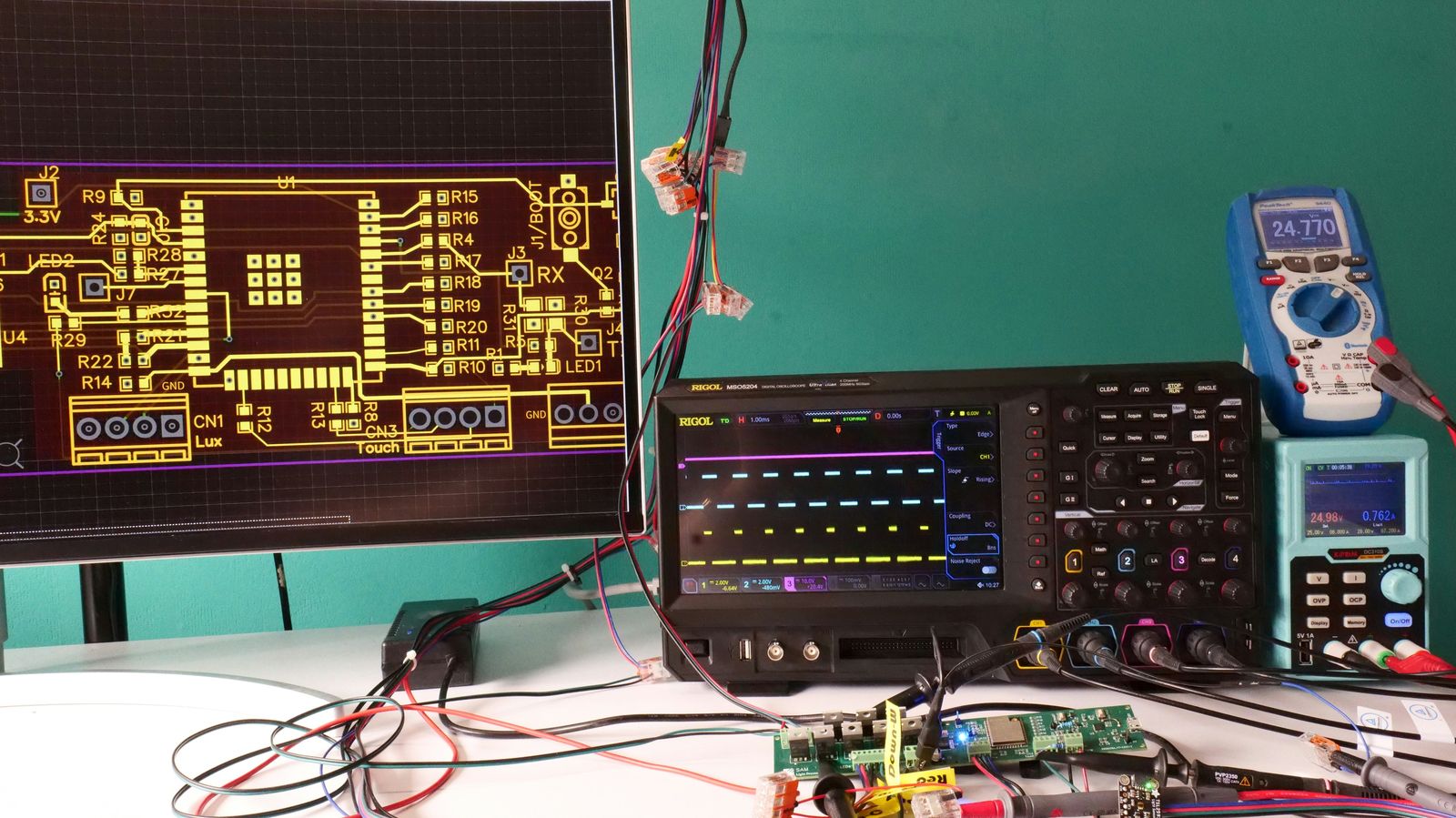
The design is done in-house: multilayer boards, impedance-controlled traces where needed, and a prototype that we populate and test ourselves before it reaches you.
Defining what it has to do
Which signals come in, what has to go out, what environment it sits in, and what has to happen if something fails. That conversation determines half the design.
Schematic and PCB design
Components chosen for availability and service life, not just for price. You get to see the schematic before a board is ordered.
Building and testing the prototype
We populate the first unit ourselves and test it on the workbench: power supplies, timing, communication, behaviour under fault conditions and under heat.
In your machine, and only then finished
A board that works on the test bench is not a board that works in your machine. The last part of the design is done on site.
When the documentation is gone
We read out what nobody can look up any more
The most difficult jobs start without a schematic. Then we start from what is in front of us.
The starting point
A board, no paperwork
No schematic, no datasheet, no manufacturer left to call. Sometimes even the component markings have been sanded off.
What we do then
Working back to the design
We draw up the schematic from the board, read out memory chips and reconstruct the communication protocol from the program code when necessary.
That is how we have made drive protocols usable again whose documentation the manufacturer never released.
For machine builders
We also supply the documentation that goes with it
Anyone who places a machine or a device on the market must be able to demonstrate that it is compliant. That is paperwork most builders have nobody in-house for — and it needs a designer who knows the technology, not just the standard.
Risk assessment
What can go wrong, how likely it is, and which measure covers it.
Technical file
Schematics, calculations, component justification and test reports, organised and ready for archiving.
Declaration of conformity
The DoC and the rating plate, drawn up with the correct data and the correct directives.
Manual
A user manual that meets the formal requirements and that a technician can actually use.
Contact
Do you have a board that no longer exists?
Send us a photo of the board and a description of what it has to do. We will tell you whether a replacement makes sense, or whether repairing the existing unit works out cheaper — we will tell you that just as readily.
Marpat bv · Ondernemingenstraat 3, office 2 · 8630 Veurne+32 471 933 441 · info@marpat.be